In today’s ultra-competitive world of professional athletics, it’s
extremely difficult to go pro. Still, there have been a number of
physically gifted, insanely versatile athletes
who’ve managed to make a name for themselves in multiple, often
surprisingly different, competitions. In many cases, these “multi-sport”
athletes have managed to rise to the top of the class in more than one sport simultaneously, cementing their reputations as some of the best all-around athletes in history. Here are ten of the most famous examples:

Baseball and football seems to be one of the most popular two-sport combinations for these athletes, and Brian Jordan is a classic example. After shining on both the diamond and the gridiron throughout high school and college, he began a career in the late 1980’s as both an outfielder for the St. Louis Cardinals and a safety for the Buffalo Bills. Despite his obvious versatility, it’s widely agreed that Jordan was always a better baseball player than he was a football defensive back (he was cut from the Bills’ training camp during his first NFL season), and after only a few years in the NFL, he left the game to pursue baseball full time. Once he narrowed his focus to just one sport, Jordan quickly became a big-time asset to his team, batting nearly .300 and hitting an impressive 22 home runs in 1995. His later career would see him become a journeyman of sorts, playing for the Atlanta Braves on two different occasions (with whom he earned an All-Star Game appearance), as well as for the Rangers and the Dodgers.
Most Impressive Achievement:
Jordan may have become known more as a baseball slugger in his later years, but for a brief period he was one of very few athletes to have ever played both football and baseball simultaneously. After leaving the Bills in the late eighties, Jordan signed with Atlanta, where he played as a defensive back. During his brief stint as a Falcon, he recorded 5 interceptions and 2 safeties, all while also serving as an outfielder for the St. Louis Cardinals.

Easily one of the most versatile female competitors from the early days of organized sports, Lottie Dod was a British athlete who excelled at tennis, golf, archery, and field hockey. She is most famous for her skill at tennis, which saw her win the ladies’ singles championship at Wimbledon five times in the span of seven years, the earliest at age 15. If that’s not impressive enough, it’s worth noting that she didn’t even bother to play the two years she didn’t win, and only lost 5 total times in her entire tennis career. After leaving competitive tennis behind, Dod moved on to field hockey, which she helped pioneer by starting the women’s team from Spital, England. She quickly became the team’s captain, and was known for being the deciding factor in whether or not they succeeded. This rule was also proved true when Dod was selected as a member of the English national team, where she scored both goals in a 2-1 win over Ireland.
Most Impressive Achievement:
Dod is most remembered as a tennis and field hockey player, but she was equally accomplished in golf and archery. In 1904, she won the national championships at golf, and after taking up archery, she secured a silver medal in the 1908 Olympic games.

Commonly regarded as one of the best all-around athletes in the history of sports, Charlie Ward was a skilled player in football, baseball, and basketball. As a quarterback at Florida State University, he led his team to a National Championship, and along the way he managed to also win the Heisman trophy by one of the biggest margins in history. He was also on the school’s basketball team, and was even said to be an accomplished tennis player. Upon graduating, Ward was faced with a tough decision, as teams in both the NFL and the NBA were expected to draft him. In a surprise move, Ward eventually chose the NBA, where the New York Knicks drafted him. He soon distinguished himself as a reliable point guard and skilled 3-point shooter, even as the NFL continued to knock on his door (according to reports, Ward was courted by the Kansas City Chiefs as a possible backup quarterback for Joe Montana). Nagging injuries eventually led to Ward’s early retirement from professional sports, but his college career alone would be enough to qualify him as one of the most accomplished multi-sport athletes in recent memory.
Most Impressive Achievement:
Ward’s college sports career was so impressive that in addition to being courted by the NFL and drafted by the NBA, he was also drafted by major league baseball teams twice, in 1993 and 1994. This was not because of any significant accomplishments in baseball—Ward hadn’t even played on his college team—it was just that he had such a good throwing arm that managers always believed they could turn him into a big-league pitcher.

Englishman Charles Burgess, or C.B., Fry was one of the most accomplished renaissance men of his time: excelling as a teacher, writer, publisher, and politician. Today, though, he is most remembered for his athletic achievements, which saw him become one of Europe’s most famous sportsmen with his uncanny skill at everything from cricket and track and field to soccer, rugby, and gymnastics. Cricket was Fry’s main game, and he was known for having one of the most consistently high averages in both the league and international play. He retired with over 30,000 career runs, which at the time was one of the all time highest totals. In soccer, Fry was also formidable, playing on both the pro side Southampton and the English national team as a defender.
Most Impressive Achievement:
Fry’s successes as a track and field star are perhaps the most convincing proof of his legendary abilities as an all-around athlete. He was best known for his skill in the long jump, and in 1893 he managed to tie the world record with a leap of over 23 1/2 feet. Fry was also an accomplished sprinter, and is known for winning the 100-yard dash during the world’s first international track meet between Oxford and Yale universities.

The most famous of Canada’s athletes, Lionel Conacher was a sportsman from the 1920’s. Primarily known as a hockey player, he was also known to compete professionally in football, baseball, lacrosse, boxing and wrestling. He started as one of the earliest stars of Canadian football while playing for the Toronto Argonauts, with whom he won the league championship in 1921. Conacher, who was known as “the Big Train,” was a standout player in his early days, and on one occasion he was said to have rushed for an amazing 215 yards on only eight carries. After traveling to the U.S., Conacher tried to bring pro football to Canada (which was amateur-only), and in 1933 he organized the first ever official league while simultaneously serving as the captain of two teams. By this time he was a professional in as many as four sports including baseball, lacrosse, and wrestling; but it was when he took up hockey that he truly became a star. Hockey was supposedly his weakest sport and the one in which he had the least interest, but Conacher still shined, leading more than one team to a Stanley Cup victory before he retired in the late 30’s.
Most Impressive Achievement:
In addition to his accomplishments as a pro athlete (which include never losing a single match as a pro wrestler), Conacher is also remembered for the sheer volume of sports that he managed to play simultaneously. One famous story from 1920 describes him as having hit the game-winning home run in a baseball game, only to catch a ride across town to play lacrosse, where he quickly scored four goals.
Famed two-sport star Deion Sanders is perhaps the most high profile of the athletes on this list, and for good reason: not only did he excel at both baseball and football, but he consistently played on quality, championship-caliber teams in both leagues. “Neon Deion” is remembered primarily for playing two sports, but in college he was even more versatile, and ran track in addition to starring on the baseball and football teams. One story describes him as playing a baseball doubleheader, running at a track meet, and then returning to play another baseball game all in the span of a day. After college, Sanders was drafted by the MLB’s New York Yankees and the NFL’s Atlanta Falcons, and decided to play for both. Unlike many athletes that pull off two pro sports careers, Sanders managed to keep competing in both leagues for a surprisingly long period of time, serving as an MLB outfielder and base-stealing expert from 1989 to 1995 (and on and off thereafter), as well as playing as a cornerback and kick returner in the NFL from 1989 to 2001. Along the way, he managed to notch an impressive 53 career interceptions as one of football’s most feared defenders, while also recording 186 career stolen bases in baseball.
Most Impressive Achievement:
There’s an ongoing argument over whether Sanders would have been a better player if he had just concentrated on one sport, but even when dividing his time, his achievements were nothing to scoff at. Not only is he the only man to compete in both the Super Bowl and the World Series, but he’s also the only athlete to ever hit a homerun and score a touchdown in the same week.

Jackie Robinson is already an icon for being the first man to break the color barrier in professional baseball in 1947, but what is often forgotten in the process is just how amazing of an athlete he really was. From an early age, he was a sports virtuoso, taking on every game that could be played and competing at a high level in all of them. In high school, Robinson played on the varsity team in multiple sports, and was a letterman in football, baseball, track, and basketball. His career really took off when he began attending UCLA, where he continued to be a standout in multiple sports (ironically, baseball was regarded as his weakest game). After college, he began playing semi-pro football as a member of the Honolulu Bears, and later served as the running back for the Los Angeles Bulldogs in the short-lived Pacific Coast Football League. Robinson finally began playing professional baseball in 1945, when he joined the Kansas City Monarchs, and it was here that he got his shot at Major League Baseball when he was selected by Dodgers manager Branch Rickey to be the first black player in the all-white leagues. As if this wasn’t a big enough accomplishment, Robinson would continue to shine after breaking the color barrier. He earned a reputation for stealing bases, once getting 37 in one season, and won the MVP award in 1949.
Most Impressive Accomplishment:
Robinson’s world-changing move into pro baseball is certainly his most important contribution to sports, but from a purely athletic standpoint, his biggest achievement might have come in college. While at UCLA, he managed to letter in four sports (football, track, baseball, and basketball), a feat that has never been equaled.
Bo Jackson could easily have become the greatest multi-sport athlete of all time had a hip injury not prematurely ended his sports career, but even in the short time in which he played, he distinguished himself as one of the most formidable sportsman in recent memory. Jackson was a standout player in both football and baseball in his teens, to the point that the New York Yankees drafted him as soon as he graduated high school. He elected to go on to college at Auburn University, where he continued to dominate as a home run hitter and unstoppable running back, and in 1985 he was awarded the Heisman Trophy. He was selected first in the NFL draft, but continued to play baseball as well, simultaneously serving as a running back for the Oakland Raiders (then the L.A. Raiders) and as an outfielder for the Kansas City Royals. He became known as a big time slugger in the MLB, hitting 141 home runs over his eight-year career, while at the same time rushing for over 2,000 career yards in the NFL, including a record-breaking 221 yards in a Monday Night game.
Most Impressive Achievement:
It’s hard to say what Jackson might have accomplished had he not gotten hurt, but many claim he would’ve been one of the all time greats, and he did succeed in becoming the first athlete to ever play in both the NFL Pro Bowl and the MLB all-star game. Amazingly, after retiring from the MLB and the NFL, Jackson even tried his hand at basketball, briefly playing for a semi-pro team in L.A.

Former NFL running back Jim Brown is commonly regarded as a contender for the title of greatest football player of all time, but what is not widely known is that he’s a running contender for the title of greatest lacrosse player of all time, as well. In fact, in his early days at high school, Brown managed to rise to the top of the ranks at nearly every sport he took up, from football and lacrosse to basketball, baseball, and track. He carried most of these interests over to college at Syracuse University, where he continued to build a name for himself as an excellent all-around athlete. In football, he managed to rush for nearly 1,000 yards in only eight games in order to score an amazing per-carry average of 6.2 yards. Meanwhile, in lacrosse he ended his senior season with 43 goals in 10 games, and was listed as a first team All-American.
Most Impressive Achievement:
If Brown’s college career was not amazing enough, his professional career in the NFL was downright legendary. After being drafted by the Cleveland Browns in 1956, Brown proceeded to break every major record in the book, including the record for career rush yards (12,312 yards), touchdowns (106), and all-purpose yards (15,549). Many of Brown’s records have been broken since his retirement in 1965, but he still remains the only NFL running back to have ever averaged more than 100 yards a game for his career.

For sheer athletic skill and versatility, early twentieth century multi-sport phenomenon Jim Thorpe simply has no equal. No other athlete since has managed to play so many different sports in so many different roles, and none has managed to do them all so well. Born in 1888, Thorpe was of Native American descent, and spent most of his early years in Oklahoma before going to school in Pennsylvania, where he was coached by legendary football whiz Pop Warner. It was here that he first began to display his athletic prowess, playing nearly every sport including baseball, lacrosse, track and field, and even ballroom dancing. After college, Thorpe pursued a professional sports career while training for the 1912 Olympic games, which were held in Sweden. He competed in multiple events in track and field, and, thanks to his ability to perform well in any event, easily won gold medals in the pentathlon and the decathlon. Thorpe used the fame he garnered from the Olympics to charge headlong into professional sports. He joined the New York Giants baseball team, and would later play for both the Brewers and the White Sox. At the same time, he was playing professional football for the Canton Bulldogs, one of the first pro teams in the league that would later become the NFL. Unbelievably, throughout it all Thorpe also played pro basketball as part of a traveling exhibition team made entirely of Native Americans.
Most Impressive Achievement:
Perhaps the most amazing thing about Thorpe is not the number of different sports he played, but his versatility within those individual competitions. Thorpe could always play on both sides of the ball, particularly in football, where he served as his team’s running back, defensive back, punter, and kicker. One legendary story tells of his college team defeating Harvard 18 to 15 in a game in which Thorpe scored every one of his side’s points. Yet another tells of how when he had a 95-yard touchdown revoked because of a penalty, Thorpe simply shook it off and scored a 97-yard touchdown on the very next play.
10. Brian Jordan
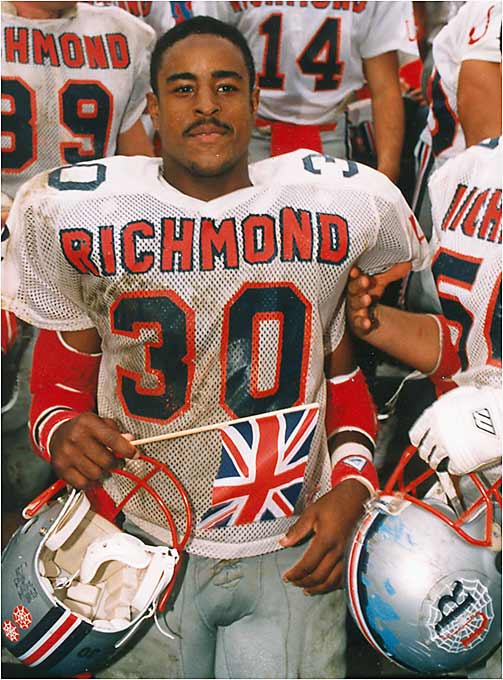
Baseball and football seems to be one of the most popular two-sport combinations for these athletes, and Brian Jordan is a classic example. After shining on both the diamond and the gridiron throughout high school and college, he began a career in the late 1980’s as both an outfielder for the St. Louis Cardinals and a safety for the Buffalo Bills. Despite his obvious versatility, it’s widely agreed that Jordan was always a better baseball player than he was a football defensive back (he was cut from the Bills’ training camp during his first NFL season), and after only a few years in the NFL, he left the game to pursue baseball full time. Once he narrowed his focus to just one sport, Jordan quickly became a big-time asset to his team, batting nearly .300 and hitting an impressive 22 home runs in 1995. His later career would see him become a journeyman of sorts, playing for the Atlanta Braves on two different occasions (with whom he earned an All-Star Game appearance), as well as for the Rangers and the Dodgers.
Most Impressive Achievement:
Jordan may have become known more as a baseball slugger in his later years, but for a brief period he was one of very few athletes to have ever played both football and baseball simultaneously. After leaving the Bills in the late eighties, Jordan signed with Atlanta, where he played as a defensive back. During his brief stint as a Falcon, he recorded 5 interceptions and 2 safeties, all while also serving as an outfielder for the St. Louis Cardinals.
9. Lottie Dod
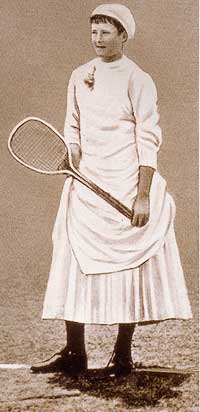
Easily one of the most versatile female competitors from the early days of organized sports, Lottie Dod was a British athlete who excelled at tennis, golf, archery, and field hockey. She is most famous for her skill at tennis, which saw her win the ladies’ singles championship at Wimbledon five times in the span of seven years, the earliest at age 15. If that’s not impressive enough, it’s worth noting that she didn’t even bother to play the two years she didn’t win, and only lost 5 total times in her entire tennis career. After leaving competitive tennis behind, Dod moved on to field hockey, which she helped pioneer by starting the women’s team from Spital, England. She quickly became the team’s captain, and was known for being the deciding factor in whether or not they succeeded. This rule was also proved true when Dod was selected as a member of the English national team, where she scored both goals in a 2-1 win over Ireland.
Most Impressive Achievement:
Dod is most remembered as a tennis and field hockey player, but she was equally accomplished in golf and archery. In 1904, she won the national championships at golf, and after taking up archery, she secured a silver medal in the 1908 Olympic games.
8. Charlie Ward

Commonly regarded as one of the best all-around athletes in the history of sports, Charlie Ward was a skilled player in football, baseball, and basketball. As a quarterback at Florida State University, he led his team to a National Championship, and along the way he managed to also win the Heisman trophy by one of the biggest margins in history. He was also on the school’s basketball team, and was even said to be an accomplished tennis player. Upon graduating, Ward was faced with a tough decision, as teams in both the NFL and the NBA were expected to draft him. In a surprise move, Ward eventually chose the NBA, where the New York Knicks drafted him. He soon distinguished himself as a reliable point guard and skilled 3-point shooter, even as the NFL continued to knock on his door (according to reports, Ward was courted by the Kansas City Chiefs as a possible backup quarterback for Joe Montana). Nagging injuries eventually led to Ward’s early retirement from professional sports, but his college career alone would be enough to qualify him as one of the most accomplished multi-sport athletes in recent memory.
Most Impressive Achievement:
Ward’s college sports career was so impressive that in addition to being courted by the NFL and drafted by the NBA, he was also drafted by major league baseball teams twice, in 1993 and 1994. This was not because of any significant accomplishments in baseball—Ward hadn’t even played on his college team—it was just that he had such a good throwing arm that managers always believed they could turn him into a big-league pitcher.
7. C.B. Fry
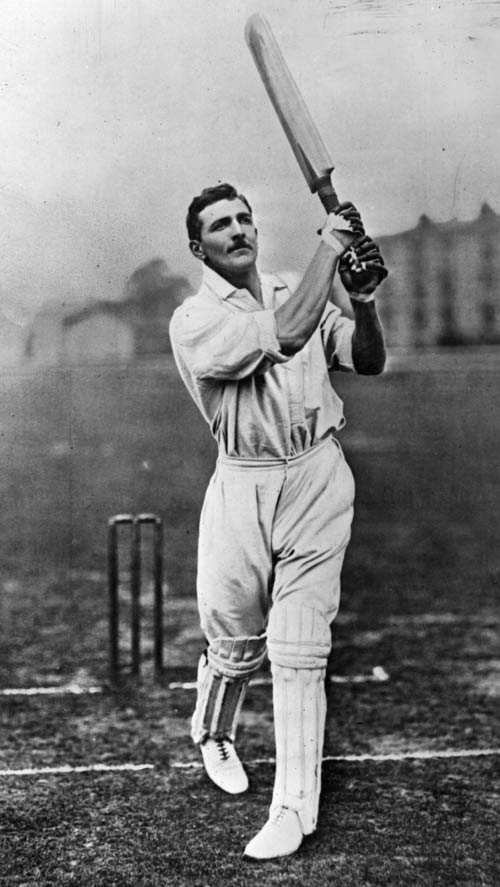
Englishman Charles Burgess, or C.B., Fry was one of the most accomplished renaissance men of his time: excelling as a teacher, writer, publisher, and politician. Today, though, he is most remembered for his athletic achievements, which saw him become one of Europe’s most famous sportsmen with his uncanny skill at everything from cricket and track and field to soccer, rugby, and gymnastics. Cricket was Fry’s main game, and he was known for having one of the most consistently high averages in both the league and international play. He retired with over 30,000 career runs, which at the time was one of the all time highest totals. In soccer, Fry was also formidable, playing on both the pro side Southampton and the English national team as a defender.
Most Impressive Achievement:
Fry’s successes as a track and field star are perhaps the most convincing proof of his legendary abilities as an all-around athlete. He was best known for his skill in the long jump, and in 1893 he managed to tie the world record with a leap of over 23 1/2 feet. Fry was also an accomplished sprinter, and is known for winning the 100-yard dash during the world’s first international track meet between Oxford and Yale universities.
6. Lionel Conacher
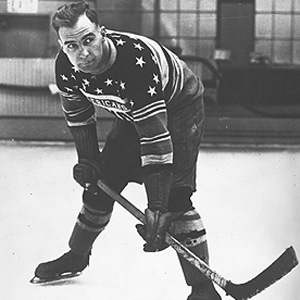
The most famous of Canada’s athletes, Lionel Conacher was a sportsman from the 1920’s. Primarily known as a hockey player, he was also known to compete professionally in football, baseball, lacrosse, boxing and wrestling. He started as one of the earliest stars of Canadian football while playing for the Toronto Argonauts, with whom he won the league championship in 1921. Conacher, who was known as “the Big Train,” was a standout player in his early days, and on one occasion he was said to have rushed for an amazing 215 yards on only eight carries. After traveling to the U.S., Conacher tried to bring pro football to Canada (which was amateur-only), and in 1933 he organized the first ever official league while simultaneously serving as the captain of two teams. By this time he was a professional in as many as four sports including baseball, lacrosse, and wrestling; but it was when he took up hockey that he truly became a star. Hockey was supposedly his weakest sport and the one in which he had the least interest, but Conacher still shined, leading more than one team to a Stanley Cup victory before he retired in the late 30’s.
Most Impressive Achievement:
In addition to his accomplishments as a pro athlete (which include never losing a single match as a pro wrestler), Conacher is also remembered for the sheer volume of sports that he managed to play simultaneously. One famous story from 1920 describes him as having hit the game-winning home run in a baseball game, only to catch a ride across town to play lacrosse, where he quickly scored four goals.
5. Deion Sanders
Famed two-sport star Deion Sanders is perhaps the most high profile of the athletes on this list, and for good reason: not only did he excel at both baseball and football, but he consistently played on quality, championship-caliber teams in both leagues. “Neon Deion” is remembered primarily for playing two sports, but in college he was even more versatile, and ran track in addition to starring on the baseball and football teams. One story describes him as playing a baseball doubleheader, running at a track meet, and then returning to play another baseball game all in the span of a day. After college, Sanders was drafted by the MLB’s New York Yankees and the NFL’s Atlanta Falcons, and decided to play for both. Unlike many athletes that pull off two pro sports careers, Sanders managed to keep competing in both leagues for a surprisingly long period of time, serving as an MLB outfielder and base-stealing expert from 1989 to 1995 (and on and off thereafter), as well as playing as a cornerback and kick returner in the NFL from 1989 to 2001. Along the way, he managed to notch an impressive 53 career interceptions as one of football’s most feared defenders, while also recording 186 career stolen bases in baseball.
Most Impressive Achievement:
There’s an ongoing argument over whether Sanders would have been a better player if he had just concentrated on one sport, but even when dividing his time, his achievements were nothing to scoff at. Not only is he the only man to compete in both the Super Bowl and the World Series, but he’s also the only athlete to ever hit a homerun and score a touchdown in the same week.
4. Jackie Robinson
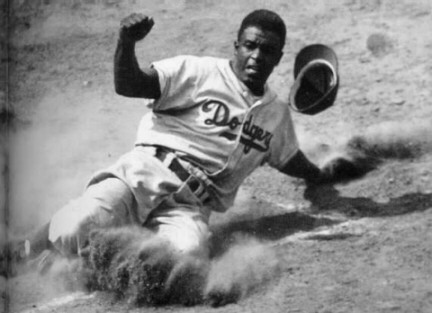
Jackie Robinson is already an icon for being the first man to break the color barrier in professional baseball in 1947, but what is often forgotten in the process is just how amazing of an athlete he really was. From an early age, he was a sports virtuoso, taking on every game that could be played and competing at a high level in all of them. In high school, Robinson played on the varsity team in multiple sports, and was a letterman in football, baseball, track, and basketball. His career really took off when he began attending UCLA, where he continued to be a standout in multiple sports (ironically, baseball was regarded as his weakest game). After college, he began playing semi-pro football as a member of the Honolulu Bears, and later served as the running back for the Los Angeles Bulldogs in the short-lived Pacific Coast Football League. Robinson finally began playing professional baseball in 1945, when he joined the Kansas City Monarchs, and it was here that he got his shot at Major League Baseball when he was selected by Dodgers manager Branch Rickey to be the first black player in the all-white leagues. As if this wasn’t a big enough accomplishment, Robinson would continue to shine after breaking the color barrier. He earned a reputation for stealing bases, once getting 37 in one season, and won the MVP award in 1949.
Most Impressive Accomplishment:
Robinson’s world-changing move into pro baseball is certainly his most important contribution to sports, but from a purely athletic standpoint, his biggest achievement might have come in college. While at UCLA, he managed to letter in four sports (football, track, baseball, and basketball), a feat that has never been equaled.
3. Bo Jackson
Bo Jackson could easily have become the greatest multi-sport athlete of all time had a hip injury not prematurely ended his sports career, but even in the short time in which he played, he distinguished himself as one of the most formidable sportsman in recent memory. Jackson was a standout player in both football and baseball in his teens, to the point that the New York Yankees drafted him as soon as he graduated high school. He elected to go on to college at Auburn University, where he continued to dominate as a home run hitter and unstoppable running back, and in 1985 he was awarded the Heisman Trophy. He was selected first in the NFL draft, but continued to play baseball as well, simultaneously serving as a running back for the Oakland Raiders (then the L.A. Raiders) and as an outfielder for the Kansas City Royals. He became known as a big time slugger in the MLB, hitting 141 home runs over his eight-year career, while at the same time rushing for over 2,000 career yards in the NFL, including a record-breaking 221 yards in a Monday Night game.
Most Impressive Achievement:
It’s hard to say what Jackson might have accomplished had he not gotten hurt, but many claim he would’ve been one of the all time greats, and he did succeed in becoming the first athlete to ever play in both the NFL Pro Bowl and the MLB all-star game. Amazingly, after retiring from the MLB and the NFL, Jackson even tried his hand at basketball, briefly playing for a semi-pro team in L.A.
2. Jim Brown
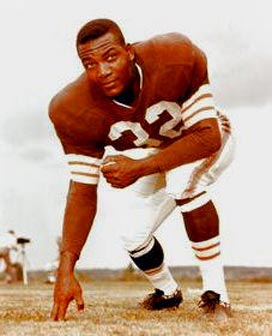
Former NFL running back Jim Brown is commonly regarded as a contender for the title of greatest football player of all time, but what is not widely known is that he’s a running contender for the title of greatest lacrosse player of all time, as well. In fact, in his early days at high school, Brown managed to rise to the top of the ranks at nearly every sport he took up, from football and lacrosse to basketball, baseball, and track. He carried most of these interests over to college at Syracuse University, where he continued to build a name for himself as an excellent all-around athlete. In football, he managed to rush for nearly 1,000 yards in only eight games in order to score an amazing per-carry average of 6.2 yards. Meanwhile, in lacrosse he ended his senior season with 43 goals in 10 games, and was listed as a first team All-American.
Most Impressive Achievement:
If Brown’s college career was not amazing enough, his professional career in the NFL was downright legendary. After being drafted by the Cleveland Browns in 1956, Brown proceeded to break every major record in the book, including the record for career rush yards (12,312 yards), touchdowns (106), and all-purpose yards (15,549). Many of Brown’s records have been broken since his retirement in 1965, but he still remains the only NFL running back to have ever averaged more than 100 yards a game for his career.
1. Jim Thorpe
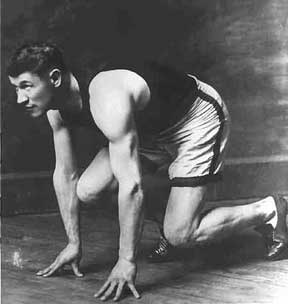
For sheer athletic skill and versatility, early twentieth century multi-sport phenomenon Jim Thorpe simply has no equal. No other athlete since has managed to play so many different sports in so many different roles, and none has managed to do them all so well. Born in 1888, Thorpe was of Native American descent, and spent most of his early years in Oklahoma before going to school in Pennsylvania, where he was coached by legendary football whiz Pop Warner. It was here that he first began to display his athletic prowess, playing nearly every sport including baseball, lacrosse, track and field, and even ballroom dancing. After college, Thorpe pursued a professional sports career while training for the 1912 Olympic games, which were held in Sweden. He competed in multiple events in track and field, and, thanks to his ability to perform well in any event, easily won gold medals in the pentathlon and the decathlon. Thorpe used the fame he garnered from the Olympics to charge headlong into professional sports. He joined the New York Giants baseball team, and would later play for both the Brewers and the White Sox. At the same time, he was playing professional football for the Canton Bulldogs, one of the first pro teams in the league that would later become the NFL. Unbelievably, throughout it all Thorpe also played pro basketball as part of a traveling exhibition team made entirely of Native Americans.
Most Impressive Achievement:
Perhaps the most amazing thing about Thorpe is not the number of different sports he played, but his versatility within those individual competitions. Thorpe could always play on both sides of the ball, particularly in football, where he served as his team’s running back, defensive back, punter, and kicker. One legendary story tells of his college team defeating Harvard 18 to 15 in a game in which Thorpe scored every one of his side’s points. Yet another tells of how when he had a 95-yard touchdown revoked because of a penalty, Thorpe simply shook it off and scored a 97-yard touchdown on the very next play.


